






Is Your Hospital Ready for Growing Cardiopulmonary Care Demands?

Understand what your hospital needs to sustain cardiopulmonary services as demand grows. Compare in-house, hybrid, and outsourced models, and explore the factors to consider when planning for future needs.

Get the Free Guide
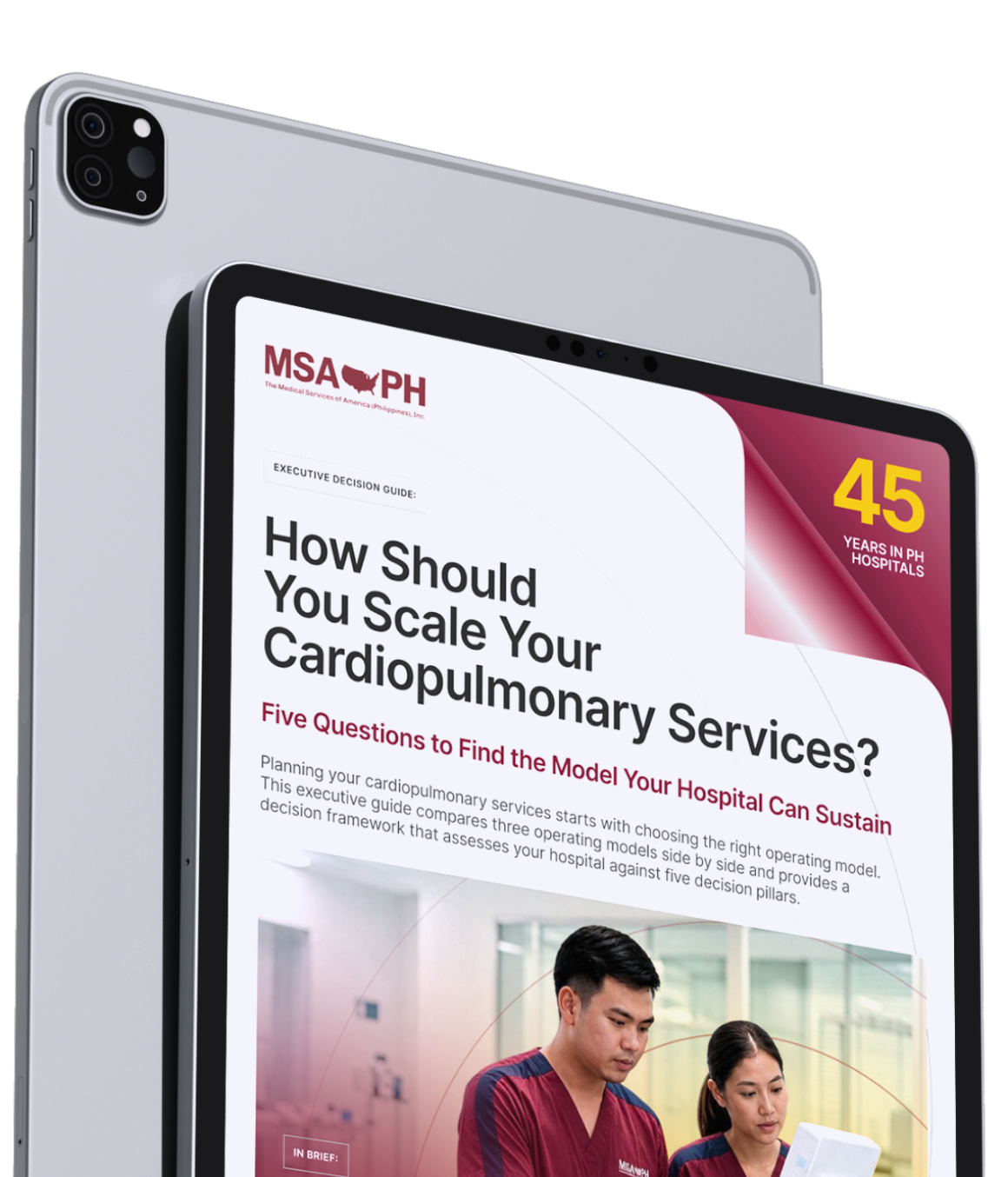
Cardiopulmonary Services Planning Guide shown on a tablet and as a printed booklet

Who Is This Guide For?

This guide is designed for Philippine hospitals evaluating how to strengthen, expand, or sustain their cardiopulmonary services.

It can help inform planning when your hospital is:

Expanding ICU or ER Capacity
Scaling Cardiopulmonary Services
Planning Equipment Investments
Reviewing Service Delivery
Preparing for Future Demand

Growing Cardiopulmonary Demand Can Put Pressure on Hospital Resources

As patient volumes and critical care needs increase, hospitals may face challenges across several areas at once.

Respiratory Therapist Shortages

Greater demand can make staffing and coverage harder to sustain.

Equipment & Capacity Needs

Higher volumes can increase the need for specialized equipment and capacity.

Maintenance & Downtime

Specialized equipment requires ongoing maintenance and technical support to help keep services available.

ICU & ER Support

Growing critical care demand can put additional pressure on existing teams and resources.

Addressing these challenges takes more than adding equipment or staff. It also requires considering how cardiopulmonary services are structured to support growing demand.

Two MSA PH respiratory therapists in maroon uniforms

There’s More Than One Way to Strengthen Cardiopulmonary Services

Each model comes with different considerations for investment, staffing, operations, and long-term sustainability.

Depending on their resources, priorities, and support needs, hospitals can consider three operating models:

In-house

Your hospital owns the equipment, employs the respiratory therapy team, and manages day-to-day operations.

How Do You Decide Which Model to Explore?

Every hospital has different resources, priorities, and operational realities. This guide provides a practical framework for comparing your options.

Inside this guide, you’ll find:

A Comparison of 3 Operating Models

See how in-house, hybrid, and outsourced models differ, including the benefits, considerations, and operational responsibilities of each.

5 Key Areas to Assess

Explore the factors that can affect your hospital’s ability to sustain cardiopulmonary services, from workforce and infrastructure to service continuity and future growth.

An Executive Scorecard

Use a simple assessment tool to bring these considerations together and support discussion around which operating models may warrant further exploration.

Get Your Free Cardiopulmonary Services Planning Guide

Complete the short form to get your copy.

Medical Services of America (Philippines), Inc. provides cardiopulmonary services, medical equipment, and technical support to hospitals across the Philippines. Since 1978, we have worked with hospital partners to support reliable, sustainable cardiopulmonary care.

  • 45+ Years of Experience
  • 35 Partner Hospitals
  • 900+ Patients Supported Daily
  • 2,200+ Medical Assets Managed

Backed by First Philippine Holdings